See it. Own it. Improve it.
A TPM maturity assessment grounded in JIPM references — with an AI TPM Coach that helps auditors see deviations, find systemic causes and track real progress over time.

Maturity by pillar — demo data.
A well-completed checklist can generate no value at all. When an audit measures the score, the organisation learns to manage the score. When it measures the ability to see a problem and fix it at the root, the organisation learns to see better — and that is what creates value.
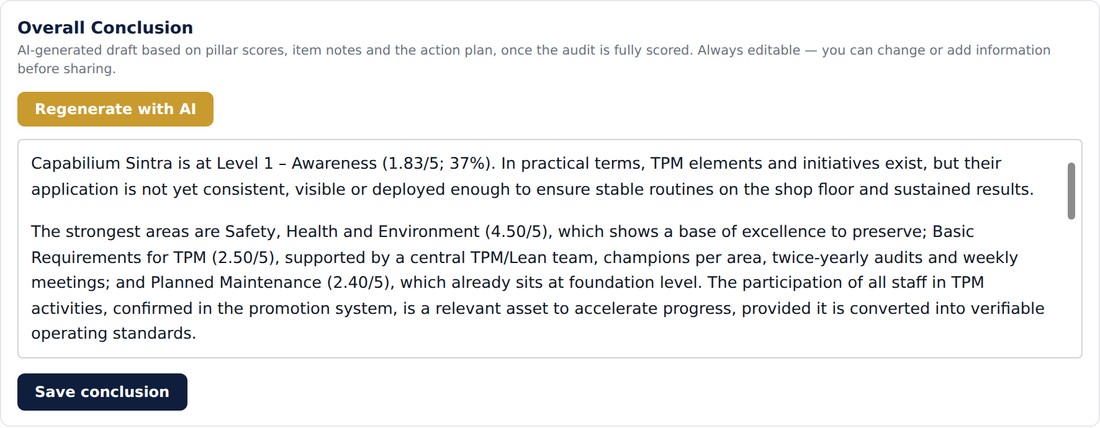
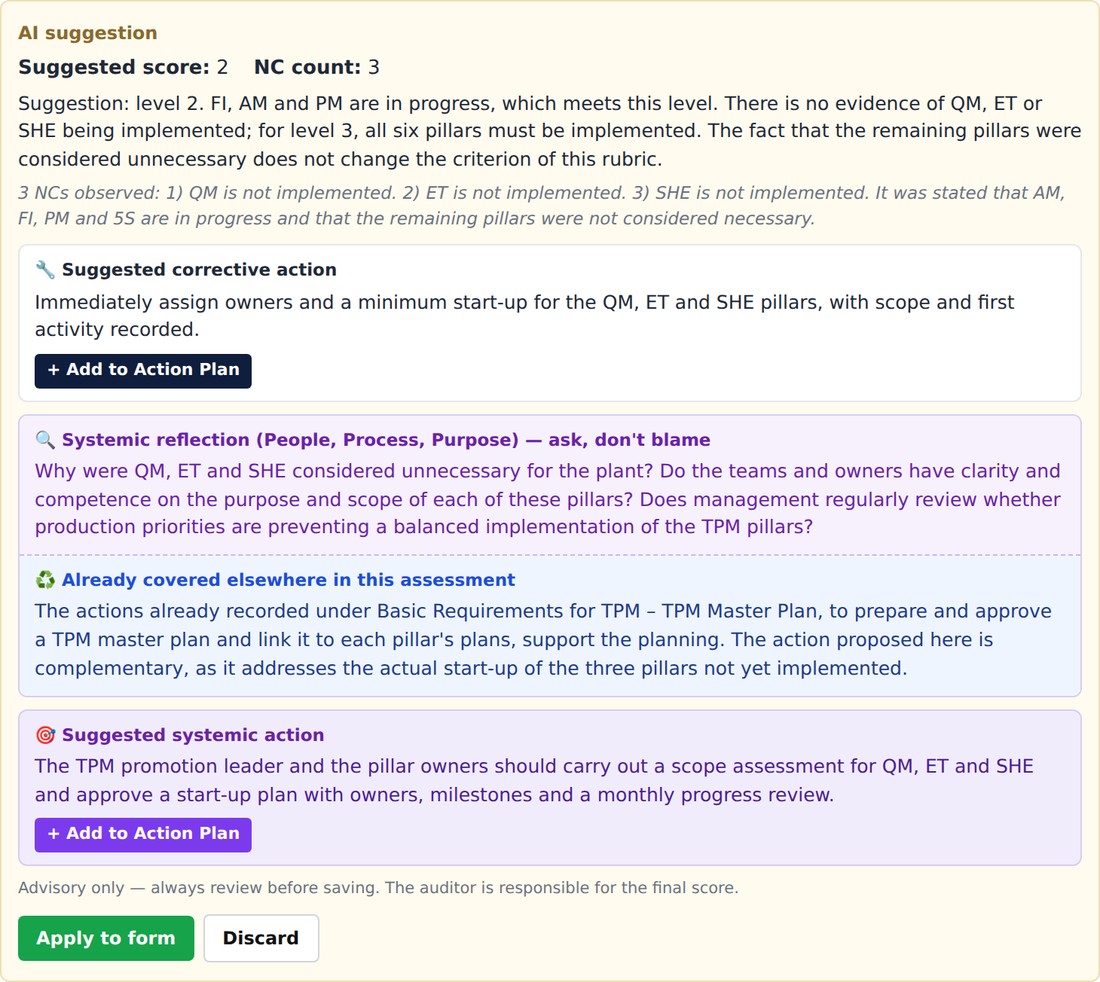
At the heart of TPM Radar is an AI agent trained to act as a TPM Coach. It supports the auditor during the assessment, compares what is said with what the evidence shows, proposes corrective and systemic actions, and builds alignment with area leaders before any action is closed.
It does not accept blame: if a response names a culprit instead of a cause, the Coach asks back — what condition in the system made this failure likely?
Every suggestion is advisory — the auditor reviews it and remains responsible for the final score.
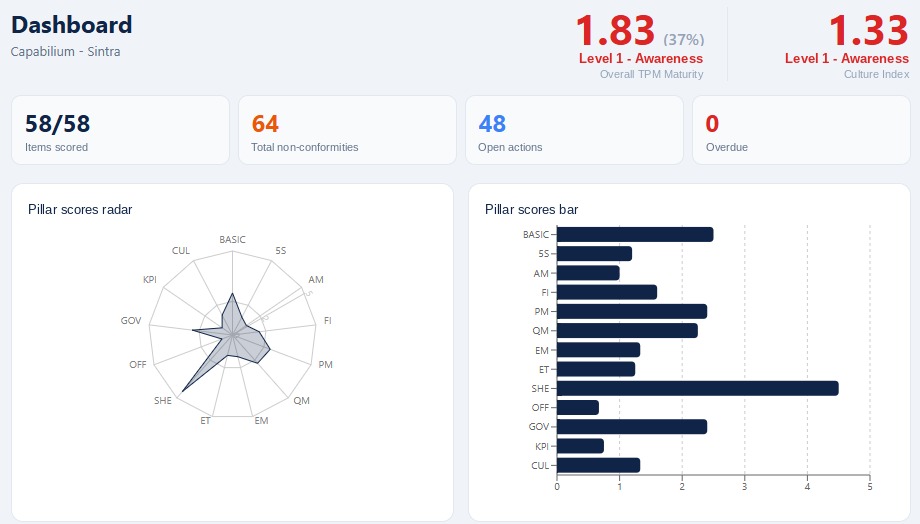
Maturity evaluated against JIPM-based references, pillar by pillar, from Awareness upwards.
The TPM Coach tests each answer against what was actually observed on the shop floor.
What to fix now — and why it happened. Never who is to blame.
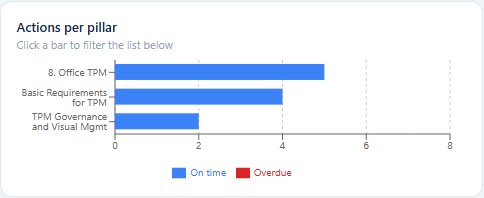
Each action has an owner, a deadline and automatic reminders while overdue. When it is closed, the system asks whether it was effective.
TPM Radar assesses the 8 JIPM pillars plus Basic conditions, 5S, Governance, KPIs and Culture — with a separate Culture Index. In a real audit made during development, one pillar reached excellence while behavioural pillars were still at an initial level. A score-only system would call that “reasonably good”. TPM Radar shows the balance is not there yet.
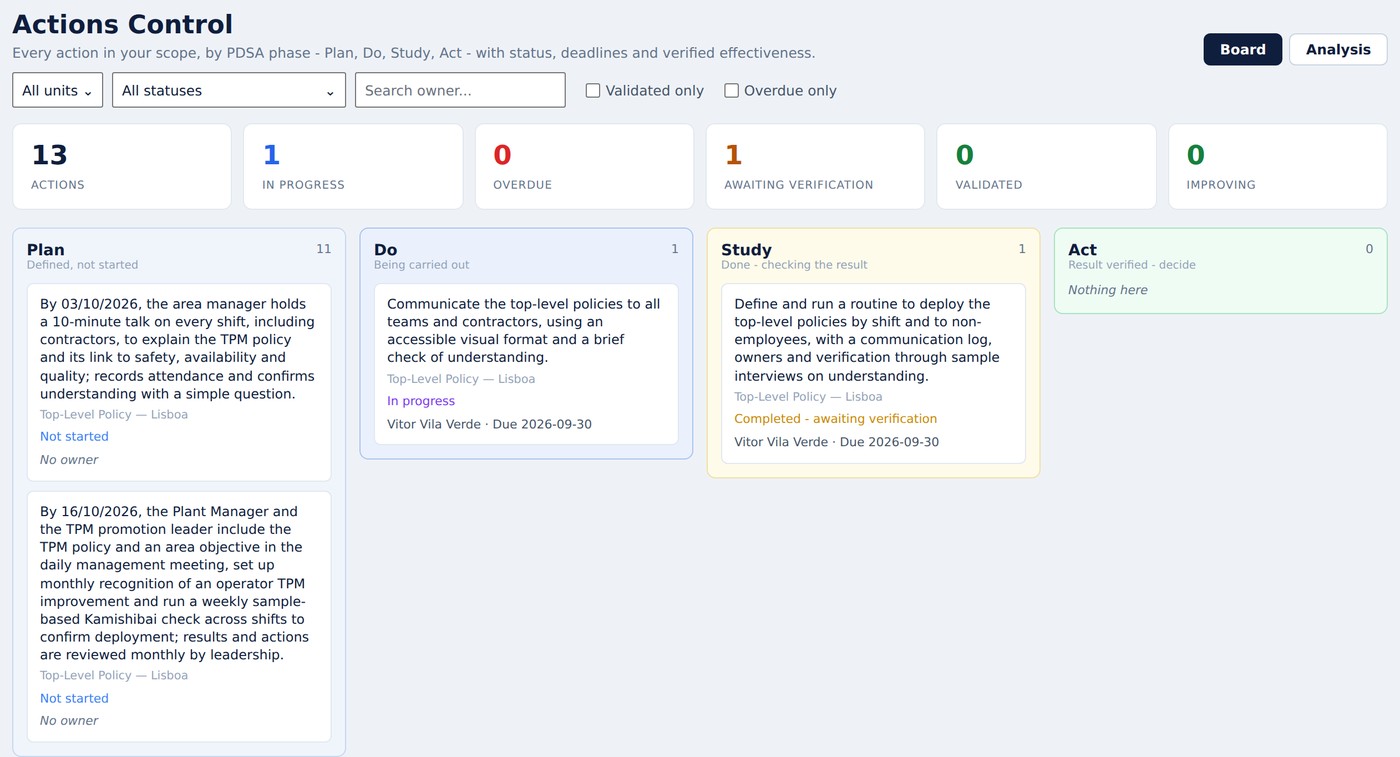
Every non-conformity becomes an action plan, tracked on a PDSA Kanban — Plan, Do, Study, Act — with owners, deadlines and automatic reminders while overdue. When an action is completed, it waits for verification: was it actually effective?


TPM Radar is not sold as Software-as-a-Service. It is delivered within consulting and transformation projects, built around the client's operating model, data and governance. The client receives full access to the source code and can run it with their own API keys, AI models and infrastructure. The goal is to strengthen the organisation's own capability, not to create dependency.
“Doing the wrong thing well is not success — it is optimising an error.”
Read the full article on LinkedIn ↗